
 English
 中文简体
中文简体
How Does Canned Food Last So Long? Retort, Seals, and Metal Packaging Explained
Oct 09, 2026
Open a can of peaches stamped three years ago, and the fruit can still taste sweet and safe. That does not happen because the food is packed with preservatives. It happens because the can, the food, and the retort process create a sealed, sterilized environment where spoilage organisms cannot grow.
The short answer: canned food lasts so long because it is commercially sterile and hermetically sealed. Heat kills the microbes that would rot it; the metal can keeps air, water, and new microbes out. The remaining shelf life depends on acidity, salt, sugar, oxygen, storage temperature, and the integrity of the can itself.
Content
- 1 Why Canned Food Lasts for Years, Not Weeks
- 2 The Retort Process: Heat Reaches the Coldest Point
- 3 The Hermetic Seal Is the Real Shelf-Life Clock
- 4 Oxygen, Vacuum, and the Chemistry Inside the Can
- 5 Acidity, Salt, Sugar, and Water Activity
- 6 What Metal Packaging Materials Contribute to Shelf Life
- 7 Storage, Date Labels, and Failure Signals
- 8 How Manufacturers Verify Long Shelf Life
- 9 Why "Lasts So Long" Still Has Limits
Why Canned Food Lasts for Years, Not Weeks
Fresh food spoils through three main routes: bacteria, molds and yeasts, and chemical reactions such as oxidation. Canning attacks all three. A retort cooks the sealed can under pressure, raising the internal temperature above the boiling point. That heat inactivates enzymes and kills vegetative bacteria, yeasts, and molds. For low-acid foods, it also destroys heat-resistant Clostridium botulinum spores, which is the safety line that separates commercial canning from ordinary cooking.
After sterilization, the hermetic seal does the long-term work. A properly formed can seam is a metal-to-metal and gasket-to-metal barrier. It prevents recontamination, keeps oxygen out, and holds a slight vacuum created as the can cools. The result is an anaerobic, low-oxygen package that is hostile to aerobic spoilage and safe for years when stored cool and dry.
- Heat: Retort temperatures typically reach 115°C to 130°C, depending on food type, can size, and process authority.
- Seal: Double-seamed ends and welded can bodies block microbes and air.
- Oxygen control: Vacuum and headspace management slow oxidation and corrosion.
- Formulation: Acid, salt, sugar, and low water activity make the remaining environment even less friendly to microbes.
The Retort Process: Heat Reaches the Coldest Point
Commercial sterilization is not about cooking every particle to the same temperature. It is about delivering a validated heat dose to the slowest-heating point in the can, often called the cold spot. In a solid-pack product, that point may sit near the center. In a liquid-filled can, it may shift with viscosity and convection. Process engineers measure time and temperature at that point and calculate a lethality value, usually described as F0.
Retorts use steam, steam-air mixtures, or water cascades under pressure. Pressure matters because a sealed can develops internal pressure as it heats. Without counter-pressure, the seam or end could distort. After the hold period, cooling is controlled so the can does not collapse. The can ends may flex outward and inward during the cycle, which is normal, but the double seam must remain tight.
| Food group | Acidity / pH | Typical process | Common shelf life |
|---|---|---|---|
| Acid fruit, pickles, tomatoes | pH 4.6 or below | Boiling water or light retort | 12 to 24 months |
| Low-acid meat, beans, soup | Above pH 4.6 | Pressure retort, botulinum cook | 2 to 5 years |
| Dry powdered or solid foods | Low water activity | Filling and sealing, sometimes nitrogen | 3 to 10 years |
The Hermetic Seal Is the Real Shelf-Life Clock
A can is not just a container. It is part of the preservation system. The body, bottom end, easy-open end, and ring tab must work together. The double seam folds the end curl and body flange into five or seven layers, with a sealing compound compressed inside. If the seam is too tight, too loose, cocked, or damaged, the can may leak, lose vacuum, or allow bacteria to enter through a microscopic path.
Material choice matters because different foods attack metal differently. Acidic products can accelerate corrosion, while high-protein low-acid foods need a reliable enamel barrier. Tinplate, tin-free steel, and polymer-coated steel are selected for adhesion, flexibility, and resistance to the product. That is why can body steel is often specified by can style: three-piece cans use a soldered, welded, or cemented body, while two-piece cans draw the body and base from a single piece of metal. If you are comparing constructions, which can body steel is right for your food can depends on the retort schedule, product pH, and forming line.
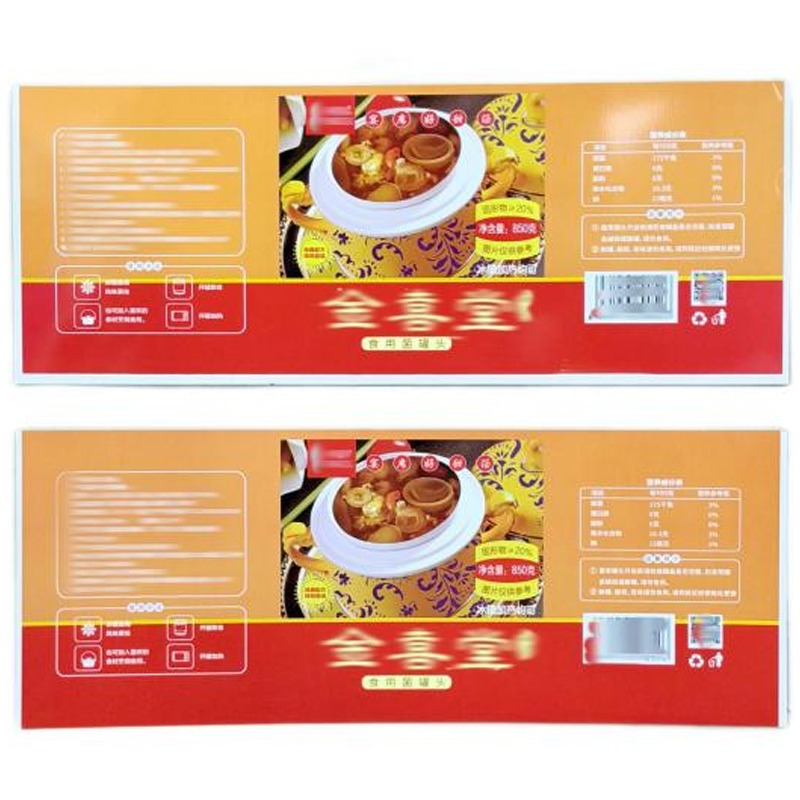 Three-piece can Can body steel Multi-colorMaterial: Tinplate or Laminated SteelView Product →
Easy-open ends add another variable. The score line must open cleanly without cracking, and the ring tab must stay attached without leaking. A beverage end or dried-food end is not interchangeable with a full-aperture end for solid-pack foods. The end stock, coating, and score depth are engineered together.
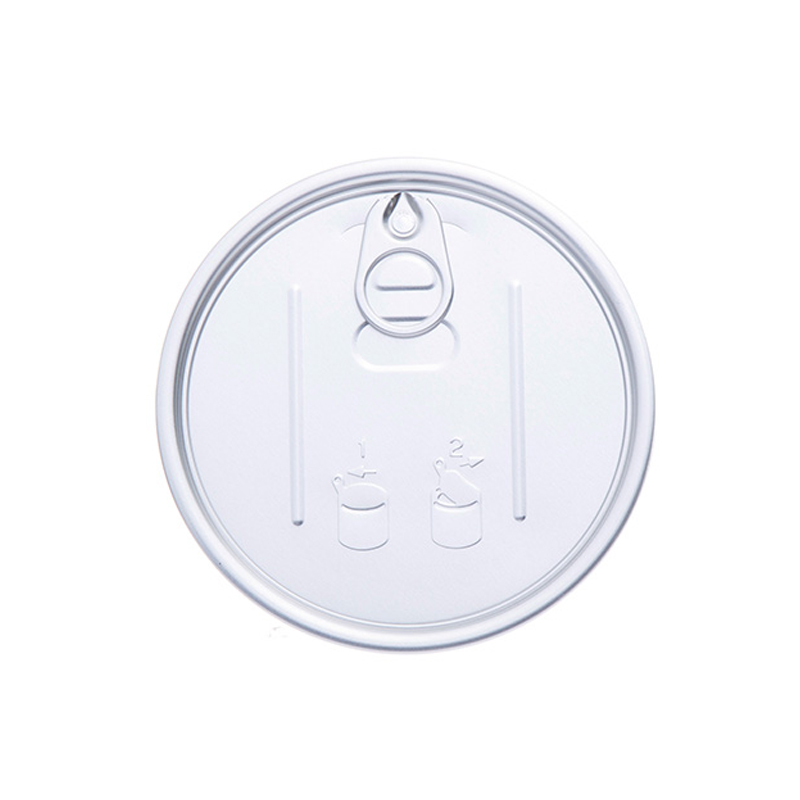 Aluminum Easy-Open-End Stock for Dry Food CansAluminum easy-open-end stock for snacks, biscuits, milk powder, and coffee powder, with customizable coatings and BPA-free compliance for dry-food can packaging.View Product →
Oxygen, Vacuum, and the Chemistry Inside the Can
Oxygen is the quiet enemy of shelf life. It drives fat rancidity, vitamin loss, color fade, and metal corrosion. When a can is filled hot and sealed, the headspace steam condenses as the can cools, creating a vacuum. Some products are filled under steam injection or nitrogen to reduce residual oxygen further. A good vacuum is not a guarantee of sterility, but it is a useful indicator that the seal is intact and the process worked.
Inside the can, the food and the metal interact. Natural acids, salts, and pigments can attack exposed steel or tin. Lacquers and enamel coatings create a barrier between the food and the metal. The coating must survive retorting, forming, and the product's chemistry. If the coating is too thin, corrosion can begin at pores or scratches. If it is too brittle, it may crack during seaming or opening. That is why internal coating selection is a food-safety decision, not only a visual one.
What Still Spoils a Can?
- Seam failure: A defective double seam can let in air and microbes after retorting.
- Underprocessing: If the cold spot does not receive enough heat, surviving spores can grow.
- Corrosion: Acid or salt can perforate the can over time, creating a leak.
- Temperature abuse: Storage above 30°C accelerates chemical changes and corrosion.
- Physical damage: Deep dents, rust, or bulging ends can compromise the seal.
Acidity, Salt, Sugar, and Water Activity
Two canned foods can follow the same retort cycle yet have very different shelf lives. The difference is often formulation. Acidity is the clearest dividing line. Foods with a pH of 4.6 or lower are considered acidified or acid foods. Their natural acidity helps suppress many bacteria, including C. botulinum. Low-acid foods above pH 4.6 require a pressure retort that is validated to destroy botulinum spores. That is why a canned tomato sauce and a canned beef stew are not processed the same way.
Salt and sugar also lower water activity, which is the water available for microbial growth. A heavy syrup, brine, or oil pack can add protection, but it does not replace proper heat processing. Dry canned products, such as powdered milk or nuts, rely on low water activity rather than a high-heat retort. Their enemies are oxygen, moisture, and pests, not vegetative bacteria.
- Acid foods: pH 4.6 or below, often hot-filled or lightly retorted.
- Acidified foods: Low-acid ingredients brought below pH 4.6 with acid or fermentation.
- Low-acid foods: pH above 4.6, requiring a pressure retort and a scheduled process.
- Dry packs: Controlled moisture and oxygen, often with nitrogen flushing.
What Metal Packaging Materials Contribute to Shelf Life
Long shelf life is not only a kitchen or microbiology story. It is also a materials story. The can body, ends, tabs, and coatings must survive months or years of product contact, internal pressure changes, and external humidity. Tinplate offers a corrosion-resistant tin layer over steel. Tin-free steel uses a chromium-based passivation layer and relies more heavily on organic coatings. Polymer-coated steel can provide a more uniform barrier for aggressive products.
For food cans, bottom-end stock and body stock are chosen together. The bottom end may be a standard sanitary end, while the top end may be an easy-open end or a full-aperture end. The metal thickness, temper, coating weight, and printing must match the forming and seaming line. If the material is too hard, it may crack at the score line. If it is too soft, it may not hold the seam dimensions. That is where coating and production-line control become part of shelf-life assurance.
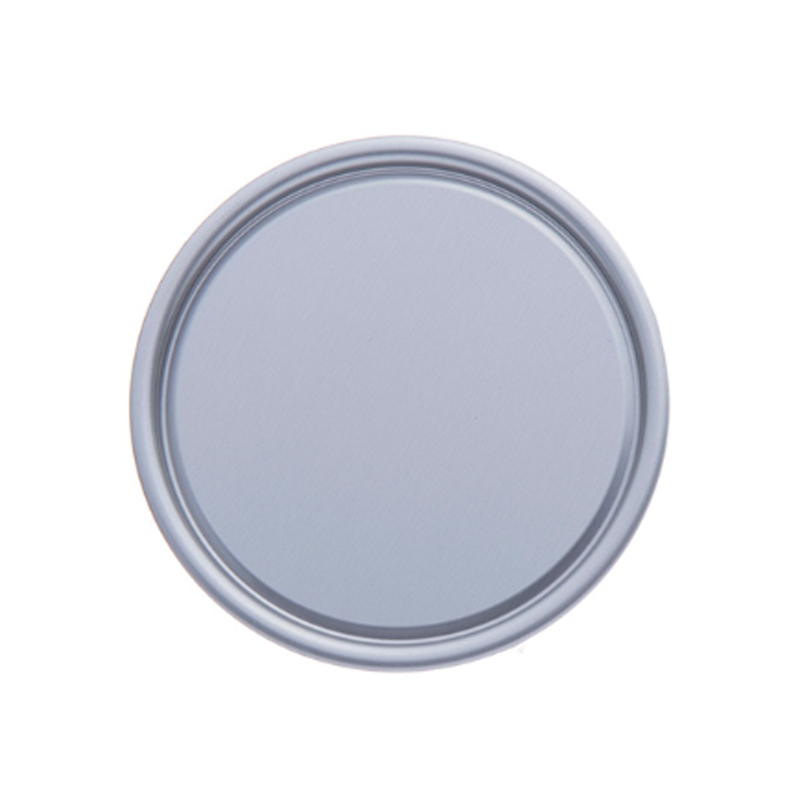 Round Food Can Bottom End Stock for Canned FoodsRound bottom-end stock in tinplate, TFS, laminated steel, or aluminum, compatible with D201, D209, D300, and D603 ends and customizable coatings for food can packaging.View Product →
Coil coating, sheet coating, slitting, cutting, and punching are not isolated steps. Each one can introduce scratches, coating skips, or edge damage that later becomes a corrosion site. A supplier that controls those steps can deliver material with more consistent adhesion and formability, which helps can makers hold their own seam and retort specifications.
Storage, Date Labels, and Failure Signals
Most cans carry a "best by" or production code rather than a strict expiration date. The date usually reflects quality, not safety. A can stored at 18°C to 22°C in low humidity may remain safe far beyond that date. A can stored in a hot garage, a damp basement, or near a stove will age faster. Heat speeds up vitamin loss, browning, and corrosion. Moisture attacks the outside label and can rust the ends.
Before opening, check the can. A small dent on the side may be harmless. A deep dent near a seam, rust that has eaten into the metal, or a bulging end is not. A bulging can may indicate gas production from microbial growth or internal corrosion. A leak, a hiss when opening, or a foul smell are also reasons to discard the product. Never taste food from a damaged or suspicious can.
- Store: Cool, dry, off the floor, away from chemicals and strong odors.
- Rotate: Use older cans first, even if the date has passed.
- Inspect: Look for rust, leaks, deep seam dents, and swollen ends.
- After opening: Refrigerate leftovers in a clean container and use within a few days.
How Manufacturers Verify Long Shelf Life
Shelf life is validated, not assumed. A processor establishes a scheduled process for each product, can size, and retort system. Quality teams then verify it with seam teardowns, vacuum checks, headspace oxygen, pH measurement, and microbiological testing. They may also run accelerated storage tests at elevated temperatures to estimate how the product will change over time. Corrosion tests and coating adhesion tests help predict whether the metal package will outlast the food's intended life.
For packaging material suppliers, quality control starts before the can is formed. Coating weight, tin coating thickness, surface cleanliness, hardness, and dimensional tolerances all affect downstream performance. A consistent coil or sheet helps the can maker avoid seam defects and coating failures that could shorten shelf life. You can see this focus in the company's quality control approach, where material properties are checked against the demands of food-contact packaging.
Why "Lasts So Long" Still Has Limits
Canned food can last for years because commercial sterilization and a hermetic seal create a stable, oxygen-poor environment. But that stability depends on every step being correct: the retort schedule, the seam dimensions, the coating, the fill temperature, the vacuum, and the storage conditions. A single weak point can turn a five-year shelf life into a spoiled can in weeks.
The same logic explains why home-canned low-acid foods need pressure canning, not a boiling water bath. It also explains why a dented can, a rusty seam, or a bulging end should be treated as a safety warning. The can is a remarkable package because it combines metal strength, polymer protection, and heat processing into one system. When that system is intact, time slows down inside the can.

- Address: No. 11 Zhenxing Road, Hangzhou Bay Shangyu Economic and Technological Development Area, Zhejiang, China
- Phone: +86-137 5814 2106 / +86-130 1771 8906
- TEL: +86-575-8272 2388 / +86-575-8272 2366
- E-mail: sales@hz-jinma.com

 sales@hz-jinma.com
