
 English
 中文简体
中文简体
Metal Packaging Materials: Can Body Steel, EOE Stock and Ring Tab Selection
Oct 16, 2026
A filling line does not order "metal packaging." It orders a coil of tinplate at a fixed temper, coated on one side, printed in five colours, slit to a defined width, and delivered in time for a Thursday changeover. The distance between that category name and that purchase order is where most metal packaging problems begin.
The short version: metal packaging is a component system, not a finished product. Steel or aluminium provides the structure, organic lacquers and coatings provide corrosion resistance and food-contact performance, and printing provides shelf presence. Specify any one of those three loosely and the other two cannot rescue the finished can.
Content
- 1 Metal Packaging Is a Component System, Not a Finished Product
- 2 A Material Map: Which Stock Does Which Job
- 3 Metal Packaging: Where It Wins and What It Costs
- 4 Writing a Specification That Holds Up on the Line
- 5 Coating, Printing and Punching: Where Quality Is Won or Lost
- 6 Ring Tabs and Mounting Caps: Small Parts, Big Stops
- 7 Compliance and Supply Risk: The Questions Buyers Should Ask
Metal Packaging Is a Component System, Not a Finished Product
Follow a two-piece beverage can from the loading bay to the filler and you pass five separately purchased materials before a single drop is filled:
- Can body stock, supplied as coated and printed coil or sheet, formed into the cylinder.
- Easy-open end stock, which becomes the lid, including the scored aperture and the rivet.
- Ring tab stock, the lever that opens the score, in aluminium or galvanised steel.
- Bottom end stock for three-piece food cans, in round, rectangular or irregular shapes.
- Mounting cap stock and punched parts, covering closures and smaller stamped components.
A supplier that only sells base metal delivers a commodity. A supplier that coats, prints, slits and punches delivers a component that arrives closer to the seamer, which shortens your own process, reduces scrap at the start of a run, and moves responsibility for coating defects upstream.
That is why "metal packaging supplier" is an imprecise phrase. The useful question is which steps of the chain the supplier actually owns: bare tinplate, coil coating, printing, slitting, punching, or the whole sequence.
A Material Map: Which Stock Does Which Job
Every component has a small set of specifications that decide whether it runs. The table below is the version worth keeping next to a purchase requisition.
| Component | Typical stock | Specifications that matter most | Failure if chosen wrongly |
|---|---|---|---|
| Can body, two-piece | Coated and printed tinplate coil | Temper, film weight, elongation, print registration | Flange splits, coating blistering during necking |
| Can body, three-piece | Tinplate sheet, single or multicolour printed | Weld-zone lacquer, blank squareness, print position | Porous weld seam, off-register decoration |
| Easy-open end | EOE stock in steel or aluminium | Score residual thickness, rivet formability, film weight | Leaking score, rivet pull-out on opening |
| Food can bottom end | Bottom end stock in round, rectangular or irregular shapes | Coating adhesion, food-contact compliance | Corrosion at the double seam, lacquer undercut |
| Ring tab | Aluminium or galvanised ring tab stock | Hardness, surface finish, corrosion resistance | Tab breakage on opening, appearance rejects |
| Mounting cap | Cap stock, clear, gold or customised both sides | Coating uniformity, gloss level | Visible surface defects at retail |
Read the third column as a negotiation list. Temper, coating weight and score residual can be measured on incoming inspection; print registration and surface finish are what a brand owner notices on the shelf.
Metal Packaging: Where It Wins and What It Costs
Metal is chosen for reasons that appear in a specification, not in a brochure.
Advantages that survive a cost review
- Barrier performance: steel and aluminium block light, oxygen, moisture and aroma, supporting shelf life measured in years.
- Retort and hot-fill tolerance: metal containers withstand sterilisation temperatures most plastics cannot.
- Recyclability: both materials are repeatedly recyclable and scrap carries real end-of-life value.
- Filling speed and stacking strength: high-speed lines and tall pallets are normal rather than exceptional.
Costs and constraints to plan for
- Input volatility: tinplate and aluminium prices track energy and raw material markets, so annual contracts often include a metal price mechanism.
- Weight and freight: a metal pack is heavier per unit, which shows up in export logistics.
- Coating compliance: internal lacquers contact food directly, so formulation changes require migration testing and documentation.
- Print economics and handling damage: multicolour setup costs penalise short runs, and dented or scuffed packs are rejects.
Writing a Specification That Holds Up on the Line
Most rejections trace back to specifications written after the order rather than before it. This sequence avoids that.
- Define the process first: retort and fill temperatures plus the seaming method set the minimum coating performance.
- Fix the geometry: can diameter, body height, seam dimensions and end diameter determine which stock widths and thicknesses are available.
- Choose the base material: tinplate, tin-free steel and aluminium differ in corrosion resistance, weldability, cost and forming behaviour.
- Set the coating system: internal lacquer type and film weight, external varnish, and whether one side or both sides are coated.
- Specify decoration: number of colours, registration tolerance, gloss level and the position of the weld or bond-free zone.
- Agree tolerances with test methods: thickness, width, camber, coating weight, adhesion and porosity should each be quoted alongside the method used to verify them.
- Request production samples: laboratory-coated panels predict high-speed line behaviour far less reliably than coil taken from a production run.
If the choice between two-piece and three-piece construction is still open, the comparison of can body steel options for food cans explains how format, print and coating requirements shift with the filling process.
For bodies where decoration carries the brand, multicolour printed two-piece can body steel arrives already coated, printed and slit to the required width, which removes an entire process step from the cannery floor.
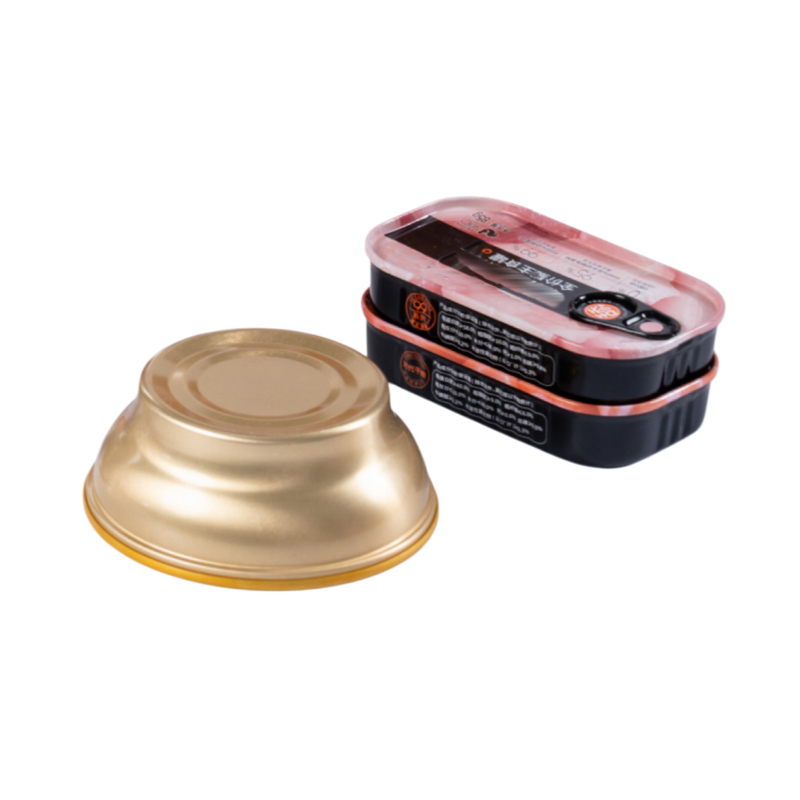 Multi-Colour Coated Steel for Two-Piece Can BodiesPre-coated, printed and slit steel for two-piece can bodies, available in aluminium or TFS and customized to support food can packaging.View Product →
Coating, Printing and Punching: Where Quality Is Won or Lost
In metal packaging the base metal rarely fails first. The coating system and the forming steps around it do.
Coating
Coil coating applies lacquer and varnish to a continuous strip at controlled film weight and cure temperature, while sheet coating performs the same job on cut blanks. Internal film weights are quoted in grams per square metre and the working band is narrow. A shift inside that band can change corrosion performance more than a change in steel thickness, which is why cure records and line speed logs matter as much as the incoming certificate. The coil coating process is the step that fixes most of this performance before any forming begins.
Printing
Multicolour decoration is a registration problem. Each colour station adds another chance of misalignment, and the weld or bond zone must stay free of ink and varnish. Define print quality with a registration tolerance and a colour reference; otherwise "good print" becomes a matter of opinion at goods-in.
Slitting, cutting and punching
Slitting sets coil width and edge condition, and a burred edge becomes a coating defect and later a crack. Cutting sets blank length and squareness. Punching and scoring turn end stock into a lid, where score residual thickness decides whether it opens cleanly or leaks under pressure.
Easy-open end stock for beverages and dried food is supplied in forms matched to the aperture type, whether that is a full-aperture round or irregular opening or a pour aperture for controlled dispensing.
 Beverage Easy-Open End Stock for Aperture-Specific EndsAluminium beverage end stock with customized finishes and end types, suited to juice, beer and other beverage packaging applications.View Product →
Ring Tabs and Mounting Caps: Small Parts, Big Stops
The least expensive components on a can are often the ones most likely to stop a filling line. A tab that fails to lift, or a cap with uneven coating, becomes either a line stoppage or a retail reject.
- Aluminium ring tabs are light and corrosion resistant, and suit beverage ends where weight matters.
- Galvanised ring tab stock offers higher strength and lower material cost, with silver, gold or custom multicolour finishes.
- Mounting cap stock comes clear or gold on both sides, or customised, for closures the consumer actually sees.
- Punched hardware parts apply the same tooling and coating discipline outside packaging applications.
Aluminium ring tab stock is a common default where corrosion resistance and a clean open are the priorities, and it is normally specified together with the end it will be riveted to rather than separately.
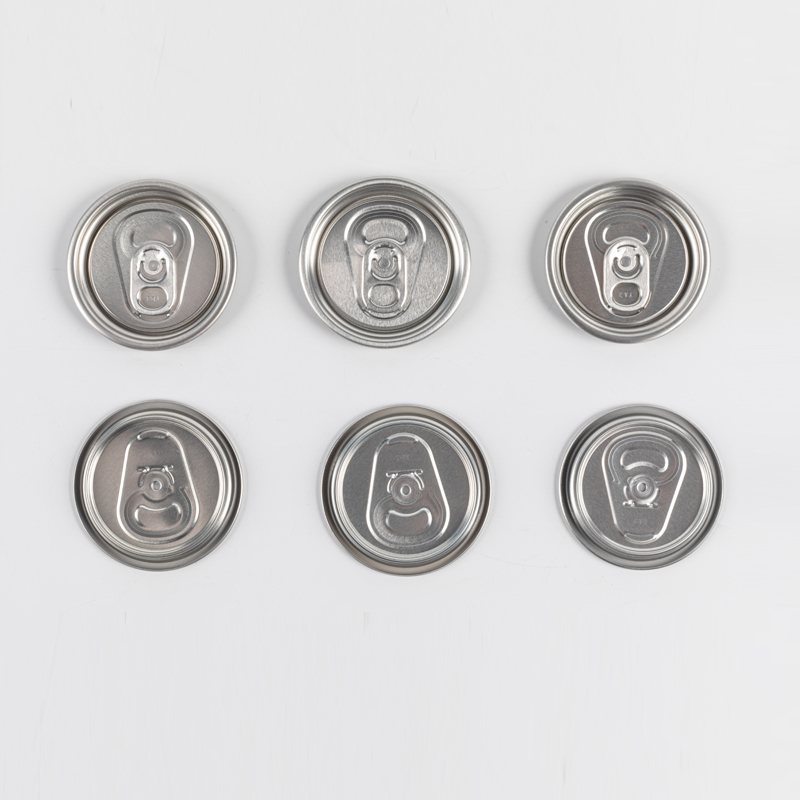 Aluminium Ring Tab Stock for Beverage PackagingCorrosion-resistant aluminium ring tab stock, customizable in coating colour and thickness, intended for beverage and industrial packaging applications.View Product →
Compliance and Supply Risk: The Questions Buyers Should Ask
Two risks decide whether a metal packaging supply relationship lasts: food-contact compliance and continuity of supply.
- Are internal coatings compliant with the food-contact regulation of the destination market, and can migration or extraction test reports be supplied?
- Is there a written specification for film weight, cure and adhesion, with a defined sampling frequency?
- Which production steps are performed in-house and which are subcontracted? Subcontracted coating is where traceability usually breaks.
- What happens when a coil lot fails incoming inspection, and who carries the cost of material already punched?
- Are labour and safety records available when a customer audit asks for them?
Metal packaging rewards buyers who treat it as an engineered component. Fix the process, then the geometry, then the coating and print system, and the number of surprises at goods-in drops sharply. Leave any of those steps to a supplier's default and the specification you receive will be the one that suits their line rather than yours.
The practical next step is small: take one can format, write down the specifications listed above, and send them with a request for production-condition samples. Quotes that arrive against a written specification are comparable. Quotes that arrive against a category name are not.

- Address: No. 11 Zhenxing Road, Hangzhou Bay Shangyu Economic and Technological Development Area, Zhejiang, China
- Phone: +86-137 5814 2106 / +86-130 1771 8906
- TEL: +86-575-8272 2388 / +86-575-8272 2366
- E-mail: sales@hz-jinma.com

 sales@hz-jinma.com
