
 English
 中文简体
中文简体
Easy Open End Material Manufacturer
Material: ETP, TFS, Aluminum
Customization: Printing, coating, thickness, hardness, size, etc.
Design: Customized
Content adaptation performance: Rust resistance, alkali resistance, acid resistance, sulfur resistance, salt resistance, easy demolding, BPA-free.
Application: Suitable for various food can ends, including fish, meat, vegetables, fruits, etc.
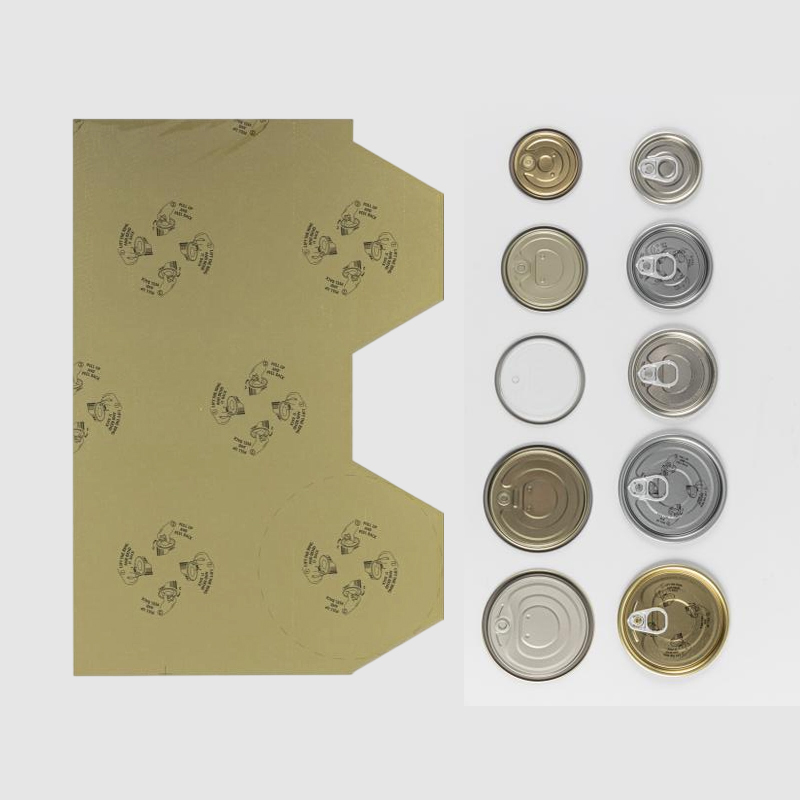
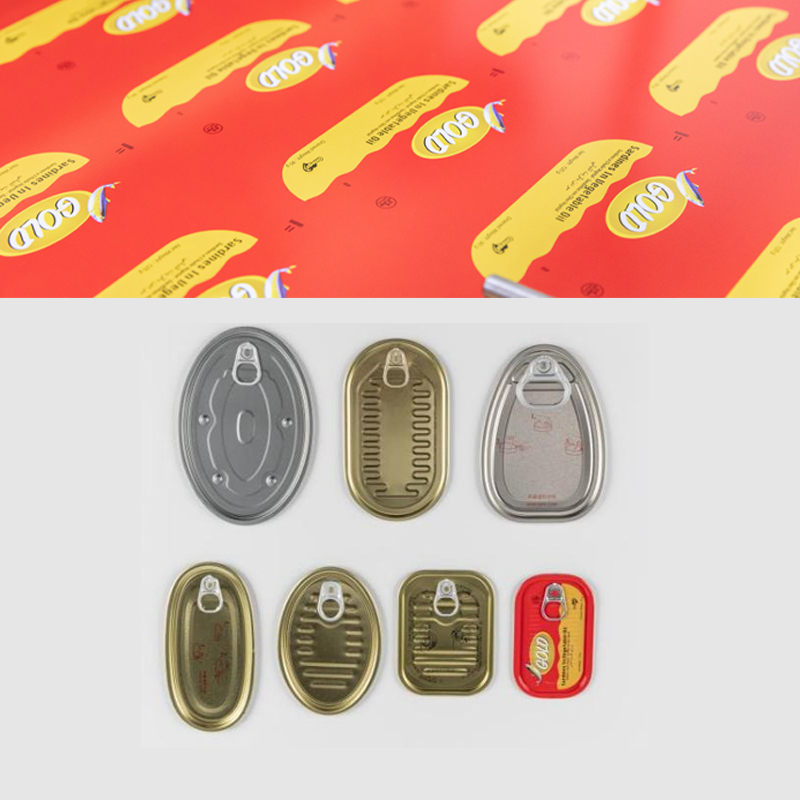
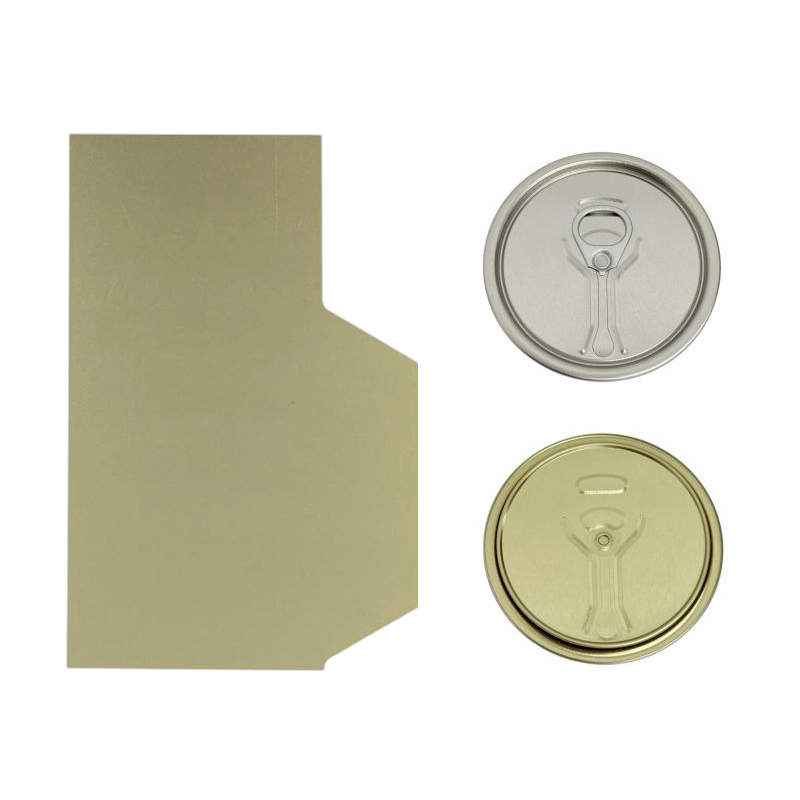
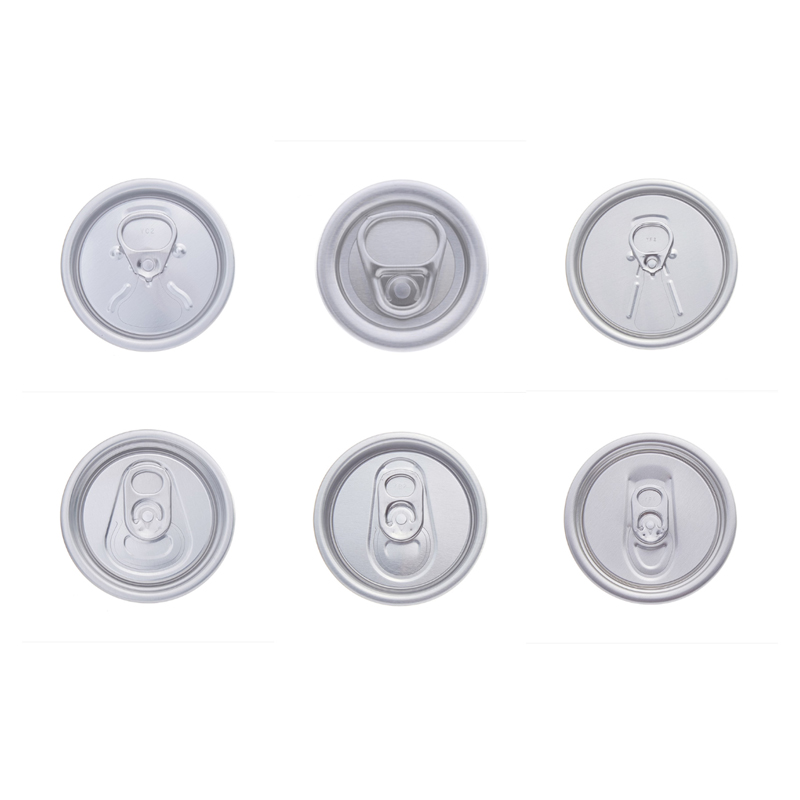
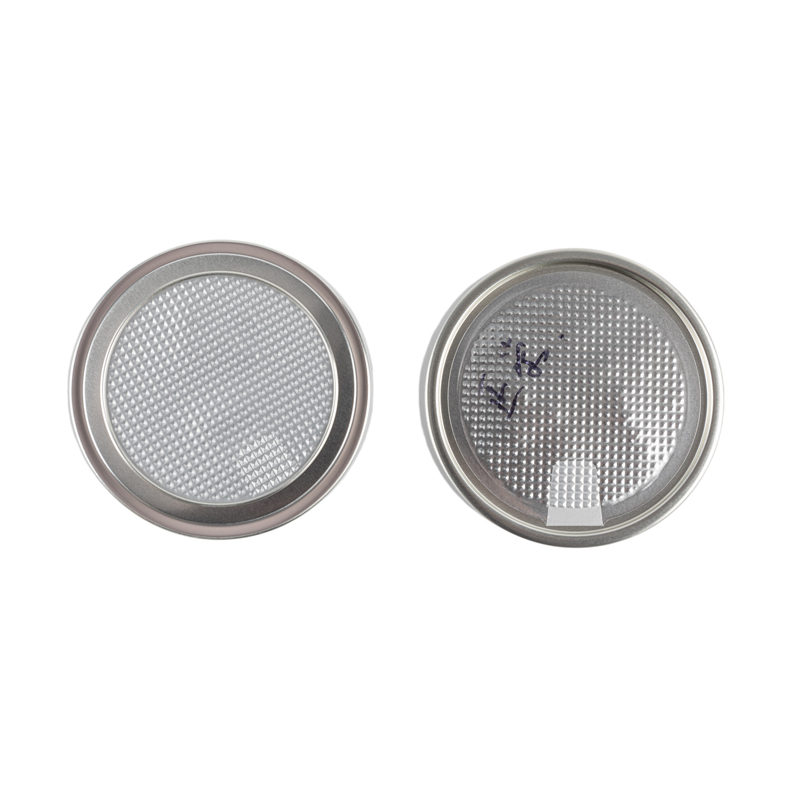
EOE Stock Industry knowledge
EOE stock — the pre-treated metal sheet from which easy-open ends (EOE) are stamped — is a precision-grade input that directly determines the safety, opening performance, and shelf appeal of finished can ends. Produced from tinplate, TFS, or aluminum sheet with customized coating, printing, and surface treatments, EOE stock must meet tight dimensional, mechanical, and food-contact compliance requirements before it ever enters an end-forming press. Understanding the material options, surface treatment methods, and end-type applications is essential for procurement teams sourcing reliable top end and EOE solutions for food and beverage packaging.
Core Advantages of High-Quality EOE Stock
- Multi-substrate compatibility: EOE stock is available in tinplate (ETP), tin-free steel (TFS), and aluminum sheet, allowing end manufacturers to select the optimal substrate for each application — whether beverage EOE, food can top end, or dried food EOE.
- Comprehensive content resistance: Properly coated EOE stock resists rust, acid, alkali, sulfur, and salt — covering the full range of canned food contents from fish and meat to vegetables and fruit — while supporting BPA-free formulations.
- Decoration flexibility: The same substrate platform supports single-color printing on iron, multi-color printing on iron, and laminating tinplate or aluminum sheet, enabling both functional and branded end surfaces within a unified supply chain.
- Dimensional consistency for high-speed stamping: Tight thickness tolerances and uniform hardness across the coil ensure stable blanking, scoring, and tab-riveting operations at press speeds exceeding 300 strokes per minute.
Material Options: Tinplate, TFS, and Aluminum Sheet
The choice of substrate for EOE stock affects forming behavior, coating adhesion, corrosion performance, and end-use compatibility. The three primary materials each have distinct characteristics:
| Substrate | Surface | Typical EOE Application | Key Property |
|---|---|---|---|
| Tinplate (ETP) | Electrolytic tin coating | Food can top end, full-aperture EOE | Natural corrosion resistance, high formability |
| TFS (Tin-Free Steel) | Chromium oxide treatment | Food and dried food EOE | Superior lacquer adhesion, cost-efficient |
| Aluminum sheet | Anodized or coated | Beverage EOE, lightweight ends | Low weight, excellent formability, recyclable |
Surface Treatment Methods for EOE Stock
EOE stock undergoes surface treatment before stamping to achieve the required barrier performance, decoration, and food-contact compliance. The three principal methods each serve different production and end-use priorities:
Printed Tinplate / TFS / Aluminum Sheet
Printing on the metal sheet before EOE stamping allows brand graphics, usage instructions, or product information to appear directly on the ends or top end of the finished can. Both single-color printing on iron — suited to commodity food can ends — and multi-color printing on iron — enabling photographic-quality graphics for premium products — can be applied to tinplate, TFS, or aluminum sheet substrates prior to end forming.
Laminating Tinplate / Aluminum Sheet
Laminating tinplate or aluminum sheet bonds a PET or PP polymer film to the metal surface, replacing liquid lacquer application. For EOE stock, film lamination delivers uniform barrier integrity across the end blank, eliminates solvent emissions during processing, and provides a reliable BPA-free interior surface. It is particularly effective for aluminum sheet beverage EOE and dried food ends where consistent seal performance is critical.
Coating (Lacquering)
Liquid food-grade lacquer — typically epoxy, polyester, or organosol — is roller-applied and oven-cured onto the EOE stock surface. Interior coating protects the metal from content attack; exterior coating provides a base for decoration or adds gloss and scratch resistance to the finished ends, top end, or EOE surface.
EOE Types and Their Applications
EOE stock is processed into several distinct end formats, each designed for a specific opening mechanism and food or beverage application:
- Full-aperture round EOE: The ring tab pulls the entire top end free, providing unrestricted access to contents. Standard for fish, meat, and vegetable food cans.
- Full-aperture irregular-shape EOE: Shaped ends for oval or rectangular cans — common in sardine and specialty food formats — require EOE stock with consistent forming properties across non-circular geometries.
- Pour-aperture EOE: A partial opening tab creates a pour spout rather than full removal. Used for liquid food products, soups, and sauces where controlled dispensing is preferred.
- Beverage EOE: Aluminum sheet stock is the standard material for beverage can ends. The stay-on tab design and precise score geometry require tight thickness and hardness tolerances throughout the coil.
- Dried food EOE: Ends for snack and dried food packaging use tinplate or TFS stock with coatings optimized for low-moisture, ambient-storage conditions. A metal crown lid or cap may also be specified for resealable formats in this category.
Zhejiang Jinma Packing Materials Co., Ltd., with over 30 years of expertise in metal packaging and 30+ high-end production lines across 40,000 clean workshop square meters in the Hangzhou Bay National Industrial Park, supplies EOE stock across all these formats — from printed tinplate food can top end stock to laminated aluminum sheet beverage EOE — supported by logistics proximity to Shanghai Port and Ningbo Port for efficient global delivery.
Frequently Asked Questions
Q1: What is the difference between EOE stock and food can bottom end stock?
EOE stock is specifically engineered for easy-open end production, requiring precise score depth control, tab-rivet compatibility, and opening-force consistency. Food can bottom end stock, by contrast, is optimized for structural load-bearing and seaming performance without an opening mechanism. While both use tinplate, TFS, or aluminum sheet substrates, their coating systems, hardness grades, and dimensional tolerances differ according to their functional roles in the finished can.
Q2: Can EOE stock be supplied with multi-color printing already applied?
Yes. Multi-color printing on iron can be applied to tinplate, TFS, or aluminum sheet before the EOE stamping process. Up to six color layers are printed via offset lithography and individually cured, enabling brand graphics or usage information to appear on the finished end surface. This is particularly common for premium dried food EOE and beverage ends where the top end is a visible branding surface at point of sale.
Q3: When should laminating be chosen over lacquer coating for EOE stock?
Laminating tinplate or aluminum sheet is preferred when BPA-free compliance is a hard requirement, when solvent emissions during production need to be minimized, or when uniform film barrier performance across the entire end surface is critical — as in beverage EOE applications. Liquid lacquer coating remains the standard for applications requiring specific acid resistance profiles or where existing production equipment is configured for roller-coat and cure operations.

- Address: No. 11 Zhenxing Road, Hangzhou Bay Shangyu Economic and Technological Development Area, Zhejiang, China
- Phone: +86-137 5814 2106 / +86-130 1771 8906
- TEL: +86-575-8272 2388 / +86-575-8272 2366
- E-mail: sales@hz-jinma.com

 sales@hz-jinma.com
