
 English
 中文简体
中文简体
Are Canning Lids Reusable? What Home Canners and Manufacturers Must Know
Sep 18, 2026
You pull a jar of tomato sauce from the canner and hear the lid pop flat—a satisfying confirmation of an airtight seal. Then the practical question arrives: are canning lids reusable? For standard two-piece metal lids, the answer is no. USDA and university extension guidelines consistently advise against reusing flat lids because the sealing compound and metal deform permanently during the first process. The screw band can be reused if it is clean, rust-free, and not distorted. The same principle carries into commercial metal packaging: easy-open ends and bottom ends are designed to seal once and open once, and reusing them would compromise food safety.
Content
Why standard canning lids lose their sealing ability
A metal canning lid does not simply sit on the jar; it forms a mechanical and chemical bond with the glass rim. That bond relies on a ring of sealing compound and the controlled flex of the metal. During processing, the lid expands, then contracts as the jar cools. The result is a permanent deformation—the lid center stays slightly concave. That dome shape is proof of vacuum, but it also means the metal and compound have been worked beyond their elastic limit. Reusing that lid means asking stressed metal and a compressed gasket to form a new seal. It rarely works.
Here is what happens on a used lid:
- The sealing compound is compressed and imprinted by the glass rim; it will not rebound fully.
- The metal dome has taken a permanent set, reducing its ability to flex during a second process.
- Edges can develop microscopic stress cracks, especially after high-heat cycles.
- Old lids may harbor residue from previous food, inviting bacteria or mold.
- There is no reliable way to verify that a used lid still meets sealing tolerances at home.
| Component | Reusable? | Why |
|---|---|---|
| Flat metal lid (two-piece) | No | Sealing compound and metal are permanently deformed. |
| Screw band | Yes, if undamaged | No sealing compound; can be washed and reused until bent or rusted. |
| Lid from commercial can | No | Formulated for the original package, not for home reuse. |
Which canning lids can be reused
The one-time-use rule applies to standard flat metal lids used in home canning. Other closure systems are designed for reuse. Some use plastic or glass lids with a removable rubber gasket; as long as the gasket is intact and the lid is not warped, they can be processed multiple times. However, they are more expensive, and their process parameters are not identical to those of metal lids. Always follow the manufacturer's instructions. If a gasket feels hard, cracked, or stretched, replace it before the next batch.
One more warning: do not take a lid from a commercially canned product and use it on a home-canning jar. Commercial lid diameters and sealing compounds are formulated for the original package, not for reprocessing at home. The same is true in reverse: a home-canning lid is not a suitable closure for a commercial filling line.
What this means for commercial can manufacturers
For metal packaging producers, the word “reusable” rarely applies to lids. In commercial production, the seal is tested statistically on every batch, and the lid is engineered for single service. Whether it is a beverage easy-open end or a food can bottom-end, the material must provide enough rigidity to form a vacuum seal, enough ductility to be formed on high-speed presses, and a coating that protects the food from the metal. If the coating is damaged, the metal can corrode and the seal can fail over time.
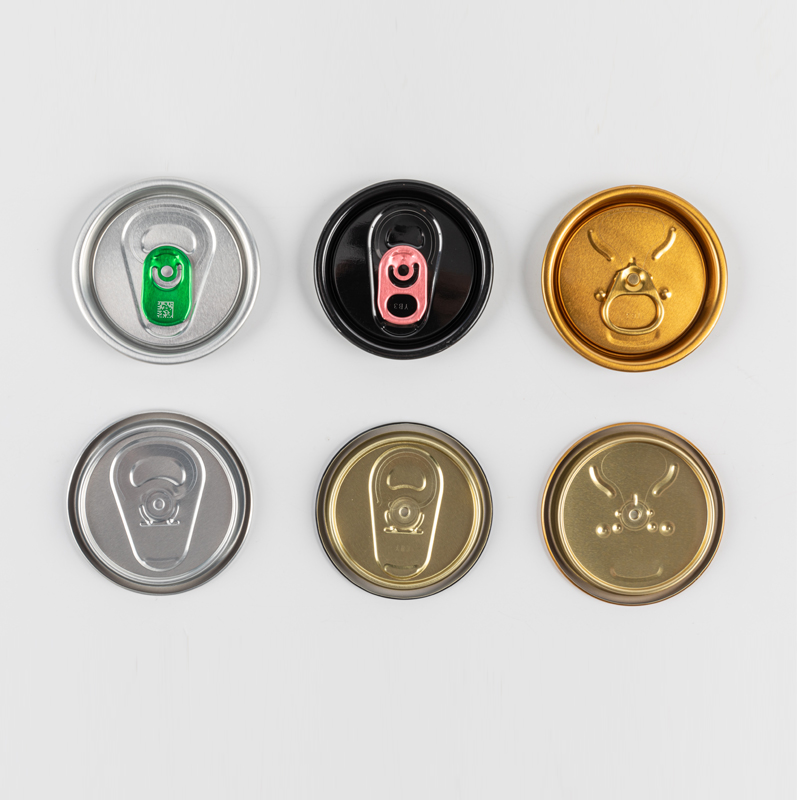 Beverage Easy-Open End Stock for High-Speed CanningThis coated metal stock is designed for beverage easy-open ends, with options for multiple end types and BPA-free compliance. Its precise temper and coating support reliable opening force and airtight sealing.View Product →
Easy-open ends, for example, are stamped from coated steel or aluminum stock with a precisely applied scoring pattern and a separate tab. The material attributes—temper, coating adhesion, and edge quality—directly affect opening force and airtightness. That is why beverage EOE stock is manufactured under tight tolerances.
Similarly, food can bottom end stock must support a strong double seam after filling. The shape—round, rectangular, or irregular—affects the seam-forming process. Using the wrong temper or coating can lead to leaks, spoilage, or dangerous bacterial growth. Many processors work directly with material suppliers to specify the exact substrate thickness and coating system.
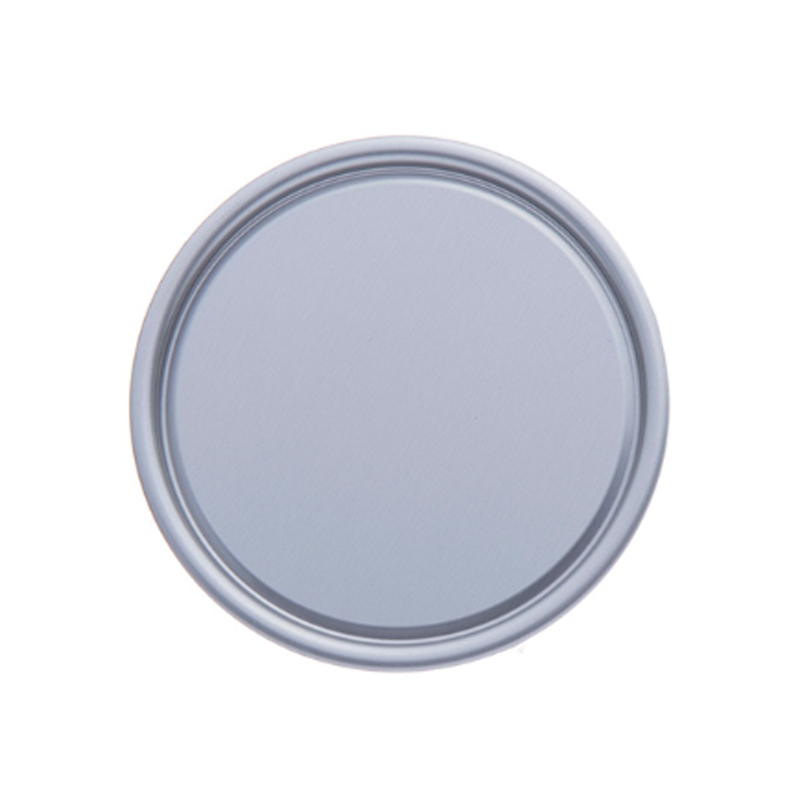 Round Food Can Bottom End Stock with Custom CoatingsSuitable for round food can ends, this tinplate, TFS, laminated steel, or aluminum stock offers resistance to rust, acids, and sulfur. It is built to form strong double seams for safe food packaging.View Product →
Even the ring tab has to meet strict performance criteria. Aluminum or galvanized steel ring tab stock must deliver smooth tearing without breaking, and it must not contaminate the contents under corrosive food conditions. A small defect in the tab material can result in consumer frustration or a compromised package.
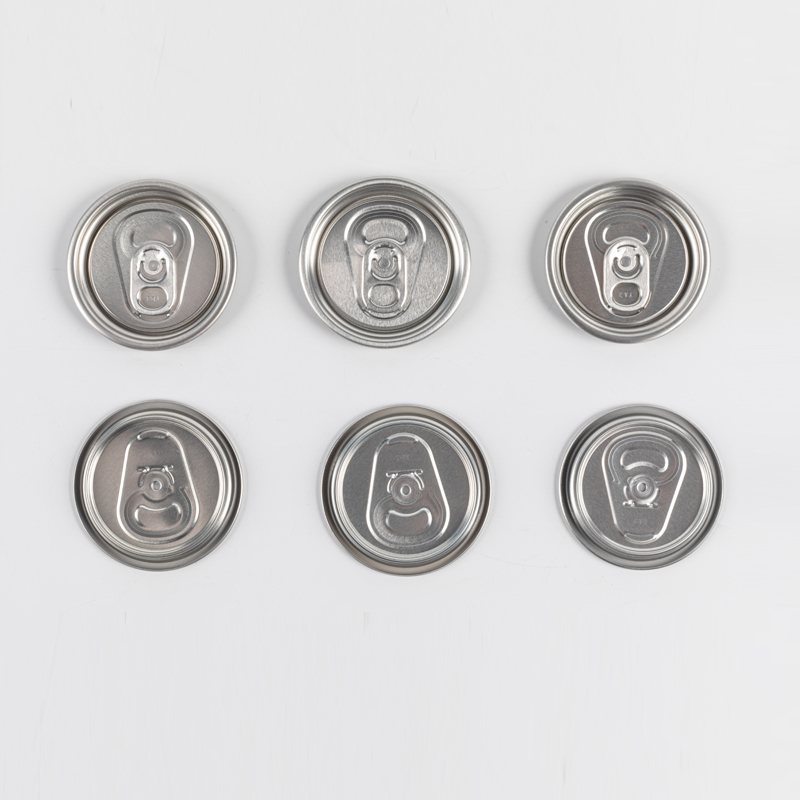 Aluminum Ring Tab Stock for Beverage and Industrial PackagingThis aluminum stock is tailored for ring tabs, providing rust and corrosion resistance with customizable colors and thicknesses. It meets performance needs for smooth tearing and safe contact with contents.View Product →
If you are evaluating lid materials, you may also want to review how coated tinplate technology has evolved to better understand what is possible with modern substrates and coatings.
How to inspect a used lid before deciding
Even though the official advice is to not reuse flat lids, home canners sometimes wonder whether a lid that sealed perfectly can be used again. Here is a quick inspection routine to understand why it is not worth the risk:
- Wash the lid in hot soapy water and dry it completely.
- Examine the inner sealing compound for cracks, debris, or a permanent groove.
- Check the metal for rust, scratches, bent edges, or a loosened rim.
- Press the center of the lid: if the dome moves or pops up, the vacuum seal has already failed.
- Run a fingernail around the outer edge: any sharp or uneven spots indicate distortion.
- When in doubt, throw it out. A home canning jar costs a few dollars; a bad batch of food is not worth the risk.
Key material considerations when buying lid stock
For commercial buyers, whether you are making easy-open ends, bottom ends, or ring tabs, raw material choice is the first step in preventing seal failure. These are the factors that matter most in a lid substrate:
| Factor | Why it matters |
|---|---|
| Substrate temper and gauge | Must match press speed and deformation without cracking. |
| Coating continuity | Pinholes expose metal to food acids and cause corrosion. |
| Printing and varnish compatibility | Inks and over-varnishes must not crack during stamping. |
| Food-contact compliance | Metals and coatings must meet FDA/EU regulations. |
| Batch consistency | Variation creates scrap and unpredictable seal strength. |
High-speed lid production leaves little room for variation. A single coil with uneven coating or changing gauge can cause downtime and rejected lids. Working with a supplier that has dedicated coating and slitting lines—such as Zhejiang Jinma Packing Materials—helps you lock down the variables that affect seal integrity.
Are canning lids reusable? For standard metal lids, the answer is no—for home canning and for commercial packaging alike. The sealing compound, the metal deformation, and the food-safety stakes all point in the same direction: use a new lid each time, or choose a closure specifically designed for reuse. For commercial producers, that means sourcing lid stock with the right temper, coating, and dimensional consistency. If you are planning a new lid project or troubleshooting a sealing issue, talk to a metal packaging material specialist before you commit to a design.

- Address: No. 11 Zhenxing Road, Hangzhou Bay Shangyu Economic and Technological Development Area, Zhejiang, China
- Phone: +86-137 5814 2106 / +86-130 1771 8906
- TEL: +86-575-8272 2388 / +86-575-8272 2366
- E-mail: sales@hz-jinma.com

 sales@hz-jinma.com
