
 English
 中文简体
中文简体
Canning with Lug Lids: How Twist-Off Seals Work, Safety Rules, and Pro Tips
Sep 04, 2026
Short answer first: lug lids can seal home-canned jams, jellies, pickles, and other high-acid foods in a boiling water bath when the jar finish, the lid size, and a tested recipe all match — but food-safety authorities do not recommend them for home canning, and they should never go into a pressure canner.
The question usually starts somewhere practical. A case of pasta-sauce jars with clean, one-piece twist-off lids sits on the counter, and the season's fruit is ripening faster than you can eat it. Reusing those jars looks thrifty and low-waste. Whether it is also safe depends on how a lug lid is built, how its seal actually forms, and how honestly you inspect the lid and jar before the water boils.
Content
What a Lug Lid Actually Is
A lug lid — often sold as a twist-off or twist-crown lid — is a one-piece metal closure. Instead of a continuous thread like a Mason jar band, the inside rim carries several short bent tabs, the lugs, that slide under matching slanted thread segments formed into the jar's finish. A quarter turn seats the lid. The lugs handle the twisting and prying forces; the vacuum does the long-term holding.
Key point: a lug lid only fits a jar manufactured with a matching lug finish. Sizes are specified in millimeters — 63 mm, 70 mm, and 82 mm are common — and a 70 mm lug lid will not seal a 70 mm continuous-thread jar, no matter how close the diameters look.
How the Seal Forms
Under the lid sits a ring of sealing compound, usually a soft plastisol. Heat from a hot fill and the boiling water bath softens that compound; expanding air and steam escape past the lugs; and as the jar cools, condensation creates a vacuum that pulls the lid's center down into a concave pop. The compound then grips the glass rim. Most lug lids are stamped from tinplated steel with a food-contact lacquer inside — the same class of coated metal that carries commercial sauces, jams, and preserves onto store shelves.
 Tinplate Steel for Lug Lid ManufacturingAs the discussion turns to how lug lids are stamped from tinplated steel with food-contact lacquer, this supplier's tinplate stock shows the base material behind such closures and can end production.View Product →
Are Lug Lids Safe for Home Canning?
Recognized canning authorities, including USDA-based guidance, recommend two-piece lids as the standard for home canning and do not endorse one-piece lug lids. The reasoning is practical rather than mysterious: a lug lid gives you no separate band to remove for seal checking, its compound and temper are not standardized for canner use the way tested canning lids are, and a marginal seal is harder to catch early.
Real-world practice is more forgiving than the rulebook. Experienced home canners report sound results with lug jars in the water bath — jams, jellies, pickles, chutneys, and tomato-based sauces — provided the food is high-acid and the process follows a tested recipe. Expect patience at cooldown, too: one-piece lids can take noticeably longer to pop, sometimes up to an hour.
Hard limits: no pressure canning with lug lids — canner temperatures and pressure can deform the lid and its compound, and low-acid foods leave no margin for error. No oven or microwave sterilizing. No improvised times, headspace, or recipes.
Treat lug lids as a water-bath convenience for high-acid recipes, keep two-piece lids for everything else, and you are working within sensible boundaries.
How to Can with Lug Lids, Step by Step
The process mirrors standard water-bath canning, with a few checkpoints specific to the lug system:
- Match the lid to the jar: same lug finish, same millimeter size, and a rim free of chips or nicks that would break the seal line.
- Inspect every lid and reject any with dents, buckles, rust, or scratches through the sealing compound — the most common causes of failed seals.
- Wash jars and lids in hot, soapy water and keep the jars hot until filling.
- Warm the lids in simmering — never boiling — water for a few minutes so the compound softens evenly.
- Fill with hot product according to a tested recipe, respect the stated headspace, release trapped air bubbles, and wipe each rim clean and dry.
- Seat the lid and twist until the lugs engage with light, even resistance — fingertip tight. Overtightening traps the air that needs to escape during processing.
- Process in a boiling water bath for the full recipe time, adjusted for altitude, with the water one to two inches over the jars.
- Cool the jars undisturbed for 12 to 24 hours, without pressing or retightening the lids.
- Test each seal: the center must be concave and must not flex when pressed. Skip the tap test — the flex test and lifting the jar by the lid are the checks that count.
- Refrigerate any unsealed jar and use it first, or reprocess it within 24 hours with a fresh lid.
Lug Lids vs. Two-Piece Canning Lids
A quick comparison shows where each closure earns its place:
| Feature | Lug (Twist-Off) Lid | Two-Piece Canning Lid |
|---|---|---|
| Construction | One-piece lid with inner lug tabs | Flat lid with compound plus a screw band |
| Jar fit | Only jars with a matching lug finish | Standard regular and wide-mouth threads |
| Official standing | Not recommended by canning authorities | Recommended standard for home canning |
| Suitable processing | Boiling water bath, high-acid foods only | Water bath and pressure canning |
| Seal feedback | Slower, quieter pop; verify by concavity | Audible pop as jars cool |
| Reuse | Possible when undamaged and compound is intact | Flat lid is single use; bands are reusable |
| Best use | Gift jars, small batches, reused sauce jars | Everyday preserving across all food types |
Reusing Commercial Lug Lids the Right Way
One genuine advantage of the lug system is that its lids and jars are built to be reopened and reclosed. A pasta-sauce lid that has done one commercial duty can seal several home batches — but only if it passes a deliberate inspection:
- The metal is flat, with no dents, buckles, or creases on the rim or the panel.
- There is no rust inside or out, and no scratches or thin spots in the sealing compound ring.
- The lugs are unbent and undamaged, so they still engage the jar threads cleanly.
- The lid came off its original jar with firm resistance, not the loose spin of a jar that never sealed well.
Wash and dry reused lids carefully, and store them away from heat, which ages the compound. If a jar of jam is destined for the pantry through winter or a long ride to a market stall, the modest cost of a fresh, tested canning lid is cheap insurance; save the reused lug lids for refrigerator jars and short-turnover batches.
Behind the Seal: Lid Materials and Coatings Decide the Outcome
Whether a lid seals on the first jar or the five-thousandth is decided long before the water boils — at the material, coating, and stamping stage. Closure converters and food packers select lid stock with the same care canners use to choose jars, and the matching logic is the one we broke down in how to choose the right can body steel for your food can.
Base Material: Tinplate Quality Comes First
Temper, thickness, and surface condition determine how cleanly the lugs stamp and how consistently a cap seats on the glass. Uniform material keeps twist-off torque predictable across a production run, which matters to a high-speed packing line as much as to your wrist. Converters who source through an in-house coil coating process can hold coating weight and cure consistency batch after batch.
Coatings and Liners Do the Quiet Work
The internal lacquer has to match the food — acidic fruits, sulfur-bearing vegetables, and oily products each attack bare metal differently — while exterior printing must survive retorting, transport, and shelf display. The liner compound's softness is tuned to the glass finish so the vacuum seal forms quickly and holds through distribution.
Coated Tinplate Supplier for Food Can EndsBecause internal lacquers must match acidic, sulfur-bearing, or oily foods and survive retorting, a coating supplier running its own lines is relevant to consistent, dependable vacuum seals.View Product →
Matching Stock to the End Use
Closure material is a family, not a single product: cap stock for twist finishes and specialty caps, full-aperture ends for easy-open food cans, and ring-tab stock for beverage ends all demand different tempers and coating systems. Buying from a supplier that runs its own coating, slitting, and stamping lines keeps those variables — and therefore your seal rates — under control.
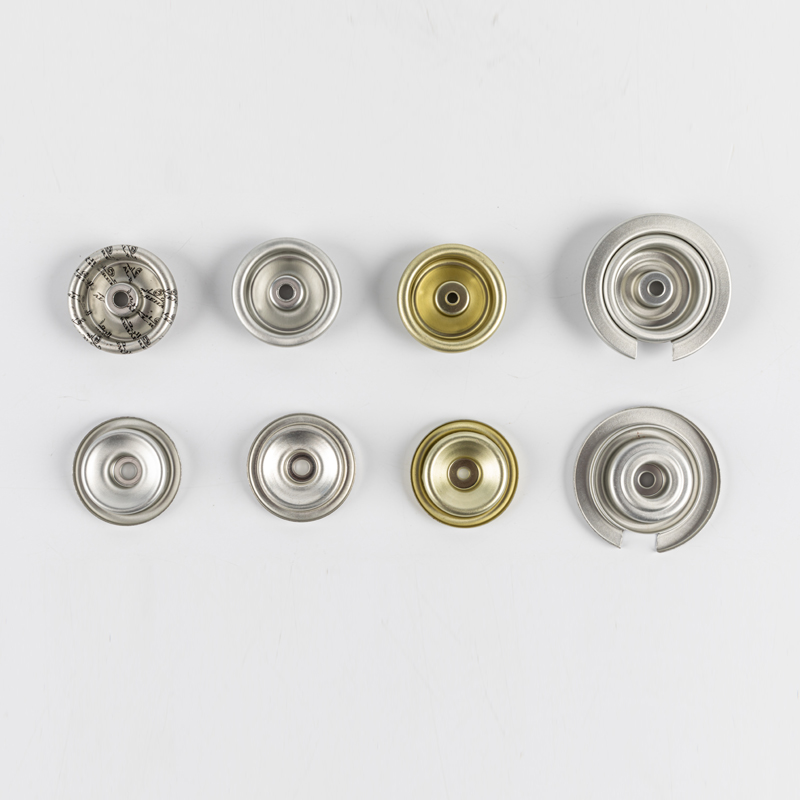 Customized Mounting Cap Stock for Metal PackagingSince dependable seals are engineered at the tinplate and coating stage, this customizable cap stock offers specified tempers, widths, and resistance properties suited to closure and packaging buyers.View Product →
The Bottom Line on Canning with Lug Lids
Lug lids are a legitimate tool for high-acid, water-bath preserving in jars made for them. Inspect the lid, warm the compound, follow a tested recipe, and verify the vacuum before the jar goes on the shelf. Keep two-piece lids as the default for anything low-acid or pressure-processed, and retire any lid that shows dents, rust, or compound damage. For packers and closure buyers, the same logic scales up: every dependable seal is engineered at the tinplate, coating, and stamping stage, so it pays to source from suppliers who control those steps in-house.

- Address: No. 11 Zhenxing Road, Hangzhou Bay Shangyu Economic and Technological Development Area, Zhejiang, China
- Phone: +86-137 5814 2106 / +86-130 1771 8906
- TEL: +86-575-8272 2388 / +86-575-8272 2366
- E-mail: sales@hz-jinma.com

 sales@hz-jinma.com
